

The Zbruch Idol: Ancient Slavic God or Romantic-Era Invention?
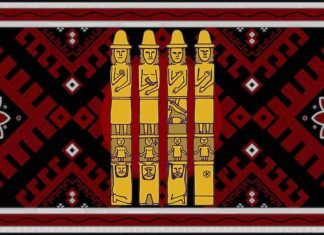
The Zbruch Idol is celebrated as a gateway to the lost world of Slavic gods — but what if it’s actually a 19th-century fake? Its strange blend of ancient myth and Romantic fantasy might hide one of history’s most intriguing archaeological deceptions.
Serbia: Home to Europe’s First Domestic Cats
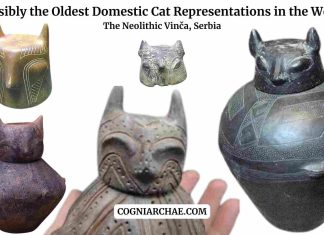
Recent research suggests that Serbia, alongside Cyprus, was one of the very first places in Europe to host domesticated cats. Neolithic figurines from the Vinča culture may even represent the oldest depictions of domestic cats anywhere in the world.
The Dupljaja Chariots: Bronze Age Vehicles of the Gods
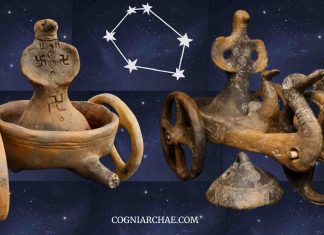
The Dupljaja chariots are Late Bronze Age masterpieces from Serbia, merging bird-faced deities, sacred canopies, and a mysterious third wheel into a single cosmic symbol. They fuse Balkan, Vedic, and Near Eastern myths into a celestial vehicle of renewal.
The Anatomy of a Dumpling: Why Pelmeni Doesn’t Mean ‘Ear Bread’

Pelmeni is often said to mean “ear bread,” borrowed from Uralic languages — but this theory, made popular by Max Müller, doesn’t hold up. A closer look at Indo-European roots reveals a deeper, more accurate origin: pelmeni likely means “membrane,” not “ear,” pointing to its structure, not its shape — and placing its roots in the grain-rich zones of early Slavic and Germanic contact, not the Uralic north.
Beyond the Fish Myth: The Real Meaning of Lepenski Vir Sculptures
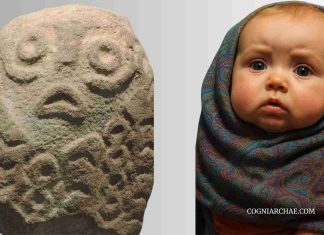
What looked like fish-worship among the Mesolithic Lepenski Vir people was more likely raw human grief carved in stone. The so-called scales were probably funerary wrappings, not fish skin.
Gusle: The Voice of Balkan Memory and Their Forgotten Etymology
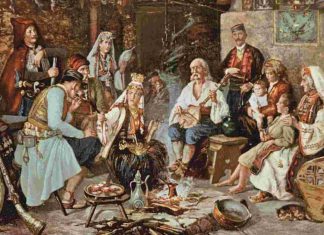
The gusle is a traditional single-stringed Balkan instrument used to perform epic oral poetry, preserving ancient cultural narratives. This article reveals its true etymology, linking it directly to the ancient word for "tendon," and explains why this linguistic connection underscores the gusle’s remarkable historical depth.
An Etruscan Voice in Dreros: Rethinking the Boundaries of the Ancient...
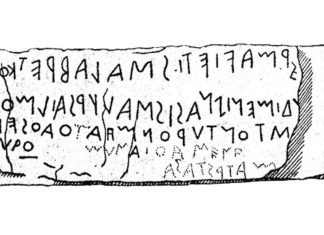
An unusual inscription found in Dreros may preserve an Etruscan funerary text, hinting at forgotten ties between Crete and ancient Italy.
Linear A Inscription from the Mavrospelio Gold Ring
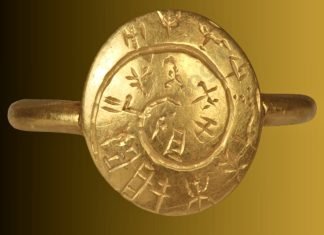
The gold ring from Mavrospelio bears a Linear A inscription that, despite the script’s undeciphered status, reveals two Cretan names: Pasiphae and Aiakos. In my reading, the text records a personal gift from Pasiphae to her partner. This suggests the ring may have served as a symbolic token of union, possibly even an early form of a wedding ring.
A Mysterious Clay Artifact Found Near Belgrade: Could It Belong to...
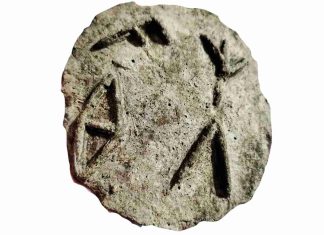
A small, circular clay artifact with four mysterious symbols was recently discovered in the mud of the Danube near Belgrade, Serbia. While the symbols resemble runes at first glance, they appear far older, drawing parallels to Neolithic and even Paleolithic markings. Given its proximity to the renowned Vinča culture site, it raises questions about whether this could be another example of Vinča symbols—potentially part of an early script.
The Bear Cult and Mother Goddess Archetype of the Vinča Culture
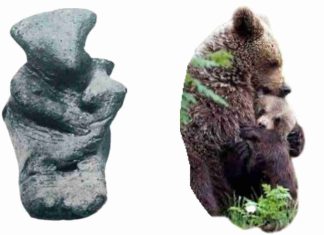
The Neolithic Vinča figurines reveal a profound connection to bear symbolism and the archetype of the Mother Goddess, reflecting themes of strength, fertility, and nurturing. These artifacts often depict bear-like features, emphasizing the spiritual reverence for the protective and nurturing qualities of the bear, especially the mother bear with her cub.


