

The Toponymic Mysteries of Southeast Asia: The Origins of Nha Trang...
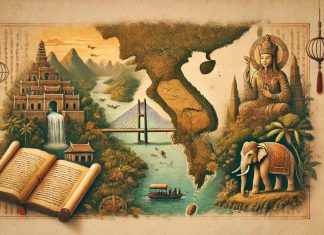
This article delves into the linguistic mysteries behind the names of two famous Vietnamese cities, Nha Trang and Phú Quốc. It explores their possible connections to ancient cultures, elephants, and even Japanese toponyms, suggesting that shared history may have influenced these names. The discussion raises intriguing questions about the origins of these cities' names and their ties to Southeast Asia's complex past.
Figurines of the Neolithic Vinča: A Glimpse into Ancient Beliefs
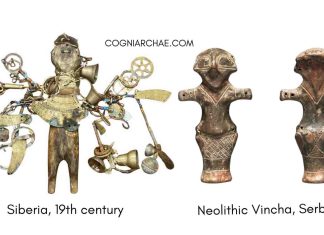
The article discusses the significance of Vinča figurines from the Neolithic period, highlighting their cultural and spiritual importance within the Vinča civilization, which flourished in the central Balkans around 6000–4500 BCE.
These figurines, often made from clay, depict human and animal forms adorned with intricate patterns, leaving scholars to speculate about their purpose.
The article suggests that they could have served similar roles to the Roman Lares, Slavic Domovoi, and Siberian Koyko idols. Though their exact meaning remains a mystery, these figurines reflect universal human concerns with spirituality, protection, and the afterlife.
Ancient Stone Jars of Southeast Asia: Practical Vessels or Ritual Relics?

During my recent trip to northern Vietnam, I noticed that the towns and villages in Cao Bằng are filled with large jars used for collecting and storing rainwater. This led me to consider whether the ancient jars found in Laos and other regions had a similar, practical function. Given the heavy rainfall in these areas and the cultural connections between the ethnic groups in Vietnam and Laos, it’s possible that the jars were originally used for water storage. The frog carvings found on some jars, symbolically linked to rain in folklore, further support this theory.
A Khazar Inscription, Discovered in Nis, South Serbia
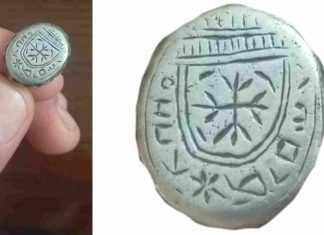
This article explores the discovery of a Khazar ring near Nis, South Serbia, highlighting its unique inscription and possible historical connections. The ring features an unusual star-like crest and an inscription written in a lesser-known script resembling the Siculorum Rovás, commonly used by Turkic and steppe peoples. The author suggests the inscription may reference the Yörüks, a nomadic Turkic tribe, and speculates on the ring's connection to the Khazars, a powerful nomadic empire that once dominated Eastern Europe.
Astronomical Images of Sayburç and Karahan Tepe, and Their Links to...
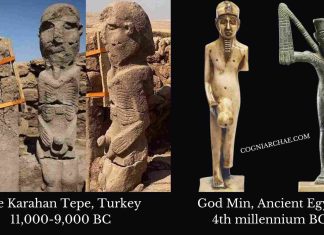
This article explores the recently discovered astronomical imagery from Sayburç and Karahan Tepe, dating back to the 9th millennium BC, and connects it to Indo-European mythology. The author argues that the depictions in these ancient reliefs, such as the bull and ithyphallic figures, correspond to constellations like Orion and Taurus, similar to scenes from the Lascaux cave and the Egyptian Dendera Zodiac.
Echoes in Stone: Tartessian Inscriptions and Ireland’s Iberian Ancestry

The parallels between the names, places, and words revealed by the Tartessian inscriptions hint at a deep and complex relationship between the ancient Irish and their Iberian counterparts.
The tale of Míl Espáine, intertwined with the ancient civilizations of Iberia, suggests that what might once have been dismissed as mere legend could hold fragments of historical truth.
The Ethnonym “Albanians” and its Slavic Origins
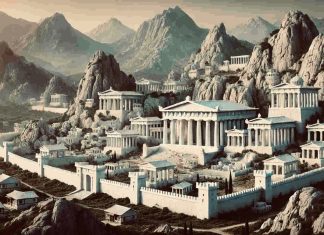
This article explores the historical roots and context of the ethnonym “Albanians,” tracing its origins to the ancient tribe known as the Albanoi, first mentioned by Ptolemy in the 2nd century AD. It examines the intriguing connections between the name “Albanopolis” or “White City” and similar toponyms in Slavic languages, suggesting possible Slavic influences.
The discussion extends to the presence of significant Slavic borrowings in the Albanian language, contrasted with the absence of Albanian influence in Serbian. The article raises the question of whether modern Albanians were the original inhabitants of Albania or if they adopted the name from another tribe during more recent historical periods such as the Ottoman occupation.
Slavs and the History of Alcohol: An Etymological Journey
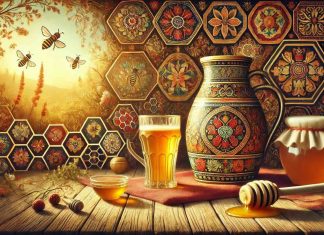
The article explores the deep connections between Slavic culture and the etymologies of various alcoholic drinks. It highlights the mythological figure Kvasir and links to Slavic fermentation practices, the ancient production of mead, and the etymological ties of beer, wine, and opium to Slavic words. By examining these linguistic and cultural connections, the article provides insight into the extensive historical influence of the Slavs on these beverages.
Sacred Vessels and Celestial Connections: The Mythic Legacy of Nestor’s Cup

Nestor’s Cup, a prominent artifact in Greek mythology, is described in the “Iliad” as a grand, four-handled vessel. The real-life discovery of a cup with an inscription on the island of Ischia links this myth to history. The article draws parallels between Nestor’s Cup and similar sacred vessels in Vedic, Celtic, Norse, and Christian traditions, highlighting shared themes of divine power and celestial symbolism. It also discusses the constellation Crater as a possible astronomical inspiration for these myths, emphasizing the interconnectedness of ancient cultures through shared mythological motifs.
Orion as a Goddess: Peeling the Layers of Ancient Star Lore
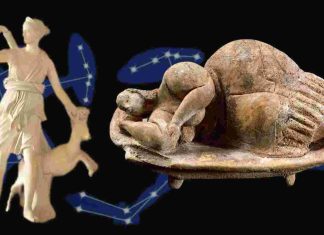
In this article we explore the multifaceted symbolism of the Orion constellation across various cultures. Orion, traditionally depicted as a male hunter in cultures like ancient Egypt, Thrace, and Vedic India, also shows potential female representations. The earliest depictions date back to the Lascaux Cave art (18,000 - 14,000 BC). The article highlights intriguing parallels, such as the Sleeping Lady of Malta and the goddess Diana, suggesting Orion might have been perceived as female in some ancient contexts. These representations point to a time when the supreme being was envisioned as a divine couple, embodying both male and female aspects, reflecting a balance in the nature and universe.


