

The Goose Girl and the Talking Horse: A Venusian Myth from...
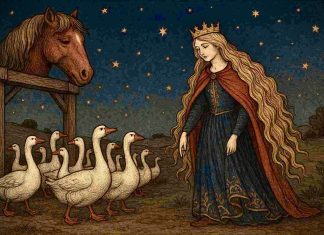
The Brothers Grimm’s Goose Girl may conceal a forgotten Bronze Age sky myth about Venus and her descent through the stars.
The Black Madonna and the Pagan Goddesses of the Night Sky
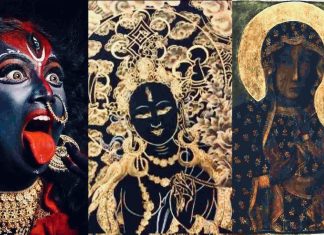
From the Black Madonna to Demeter, Isis, and Kali, the dark mother embodies the night sky itself — the solstitial gate where death descends and the promise of rebirth begins.
Zbelthurdos and Iambadoulē: Thunder, Torch, and Sacred Mockery
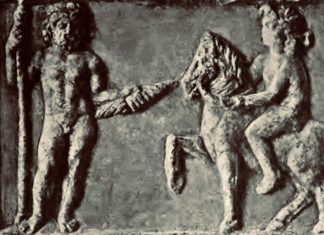
Zbelthurdos and Iambadoulē appear as Thracian counterparts of Dionysus and his obscene maid, their torchlight and laughter mirrored in the constellations and the solstitial rites of fertility and renewal.
Slavic Expansion: Migration or Re-Emergence?
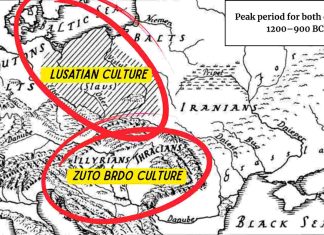
A new genetic study claims the Slavs arrived from Belarus in the 6th century, but archaeology and history suggest their roots lay in ancestral lands shaped a thousand years earlier.
Orpheus and Eurydice: The Lyre, the Scales, and the Stars
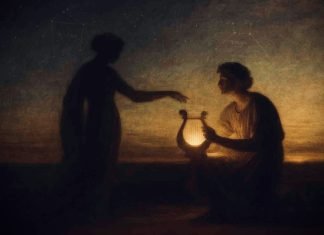
The myth of Orpheus and Eurydice is a Bronze Age sky allegory, where the harper (Lyra) follows the very just maiden (Libra) into the underworld of winter and rises again alone in spring.
From Nest to Knowledge: An Etymological Journey
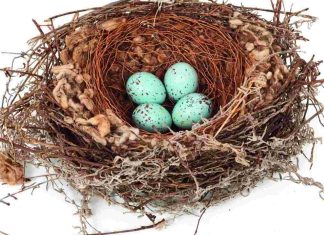
From nest to brain, Indo-European words reveal that knowledge is not stored but woven — a thread that, like Ariadne’s, guides us through the maze of thought.
Sabbazius – a Thracian Deity or a Persian Import?
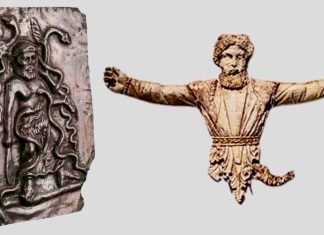
The Green Man was more than folklore; in Thrace he was Sabbazius, a god shaped by both local cult and Persian influence.
Before Cyrillic: The Buyla Inscription and the Slavic-Bulgar Frontier
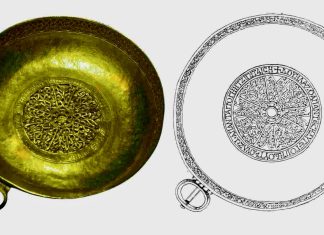
The Buyla inscription demonstrates how Greek script was adapted to record Bulgar and steppe terminology, providing a clear antecedent to the development of Cyrillic in the early 9th century.
Triballi and Serbs – A Byzantine “Invention” or Ancient Memory?
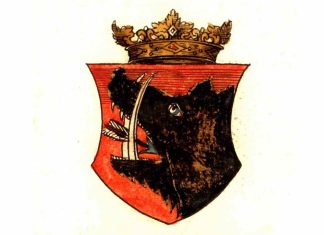
Long before Byzantine chroniclers equated the Serbs with the ancient Triballi, Athenaeus of Naucratis recorded both Triballi and “Syrbenians” side by side in a 2nd-century Greek text.
Did Ancient Slavs Drink Haoma?
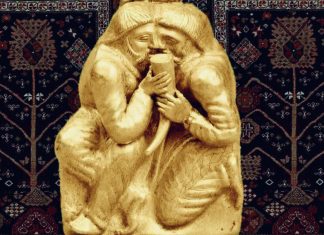
A Neo-Assyrian relief of a genie and the Tree of Life may reveal that poppies and Ephedra—the plants behind Haoma or Soma—were known far beyond Iran, with echoes even in Slavic tradition.


