

From Janus to Brahma: The Indo-European Guardians of Beginnings and Endings
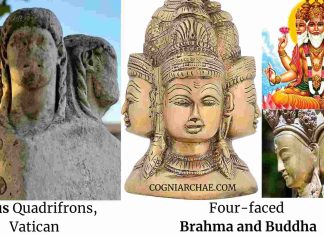
Janus, the ancient Roman god of beginnings and transitions, is uniquely depicted with two faces, symbolizing his dominion over both past and future. His influence permeates Roman culture, from marking the start of the year in January to overseeing the gates of Rome. The Romans inherited Janus from the Etruscan deity Culsans, who similarly guarded thresholds with his dual-faced image. Fascinatingly, linguistic and cultural parallels connect Janus to the Vedic god Brahma, suggesting a mythological influence that goes further back in time.
Nemus Sorabense: “The Sorbian Forest” in the heart of ancient Sardinia
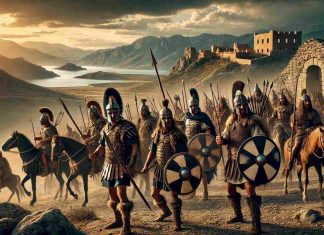
Nemus Sorabense, or “The Sorbian Forest,” was an ancient Roman mansio located in what is now Sorable or Sorabile in Sardinia, along the Karalis-Ulbia road. This site, near present-day Fonni, played a crucial role in Roman travel and trade until its destruction by the Vandals in the fifth century, aided by local Barbarians. The name suggests a historical connection to the Sorbs, an ancient Slavic group, which is further supported by the high prevalence of the I2a haplogroup in Sardinia, linking the island genetically to the Balkans. Notably, Ptolemy’s placement of Sardinians in Illyria adds another layer to this intriguing historical connection.
The Costoboci: Ancient Slavic Warriors of the Carpathians
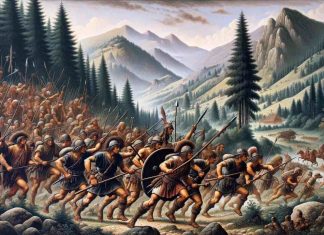
The article provides a detailed overview of the Costoboci, ancient warriors who inhabited the Carpathian region (modern-day Romania, Ukraine, and Poland). They emerged in the 2nd century AD, launched raids across the Balkans, and mysteriously disappeared.
Their cultural identity is debated, with associations to Dacian, Thracian, Sarmatian, Slavic, Germanic, or Celtic origins. The Costoboci are mentioned in historical records like Ptolemy’s “Geographia” and Roman accounts of their raids during the Marcomannic Wars. Their language remains largely unknown, though some names offer clues to their possible Slavic roots.
The Calendar Conundrum, or How We Ended Up Living in a...

Modern society often prides itself on being the pinnacle of human development, a culmination of progress and enlightenment. There is a prevailing arrogance that...
A Few Pre-Greek Words, Seen Through a Slavic Lens
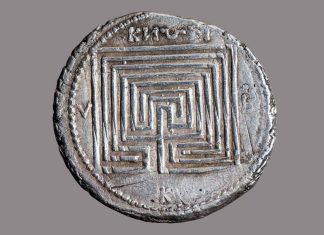
This article proposes that the mysterious pre-Greek substrate language shares a connection with Balkan Slavic languages. It highlights the resemblance between certain pre-Greek words, especially those ending in -inth and -ynth, and similar Slavic terms. By comparing place names and other vocabulary that defy traditional Indo-European etymology, the article suggests these similarities might indicate a closer, historically overlooked linguistic relationship between pre-Greek and Slavic languages.
Plochnik – the settlement of the first European copper miners
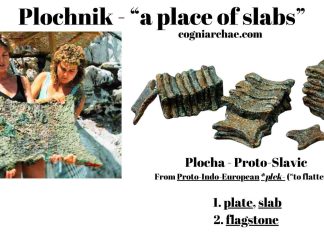
This article discusses the significance of Plochnik, a renowned archaeological site in Serbia, within the context of European copper mining history. The name Plochnik, prevalent in Slavic-speaking regions of the Balkans, translates to "a place of (many) slabs" and is thought to refer not to stone slabs, but to copper ingots produced and stored at the site for trade.
The Garigliano Bowl Inscription – A Tribute to Dioscuri?
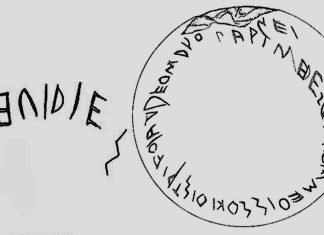
The article discusses the Garigliano Bowl, a simple impasto bowl with a bucchero glaze dating back to around 500 BC, found near the ancient city of Minturnae in Italy. It features one of the earliest known Latin inscriptions, significant for understanding Latin's development and dissemination in ancient Italy. The inscription, controversial in parts, is interpreted by most scholars to mention a person named AHUIDIES (possibly Ovidius) and a plea for protection for the inscriber and his companions. The article's author offers a unique interpretation of the inscription, suggesting it's a tribute to the Dioscuri, Castor and Pollux, revered deities known for aiding travelers and sailors, and accessible in worship to even lower social classes.
The Duenos Inscription Revisited
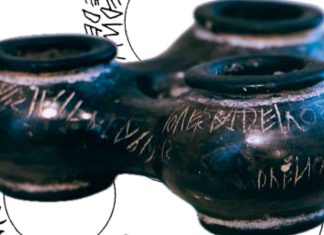
The Duenos Inscription is a significant relic from 6th century BCE Rome inscribed in Old Latin. In this article, we challenge prevailing translations, advocating for a different reading of certain letters, and propose a nuanced interpretation that aligns the text with a ceremonial tribute to major Roman deities and their consorts.
A Comprehensive Translation of the Pyrgi Tablets Etruscan Inscription
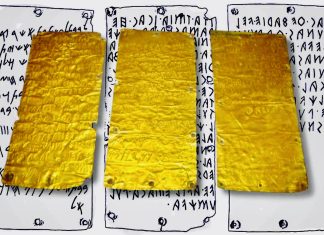
The article offers a complete, line-by-line translation of the Etruscan part of the Pyrgi tablets inscription, compeletely in line with the already translated Phoenician part.
On the language of San Sosti Axe-Head inscription
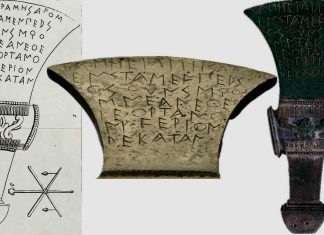
The article reinterprets the 6th-century BC San Sosti Axe-Head inscription from Calabria, Italy, suggesting a blend of local linguistic influences rather than purely Achaean Greek, and proposes a more personal, rather than formal, nature of the dedication.


